Acknowledging the Lenni-Lenape Native Americans

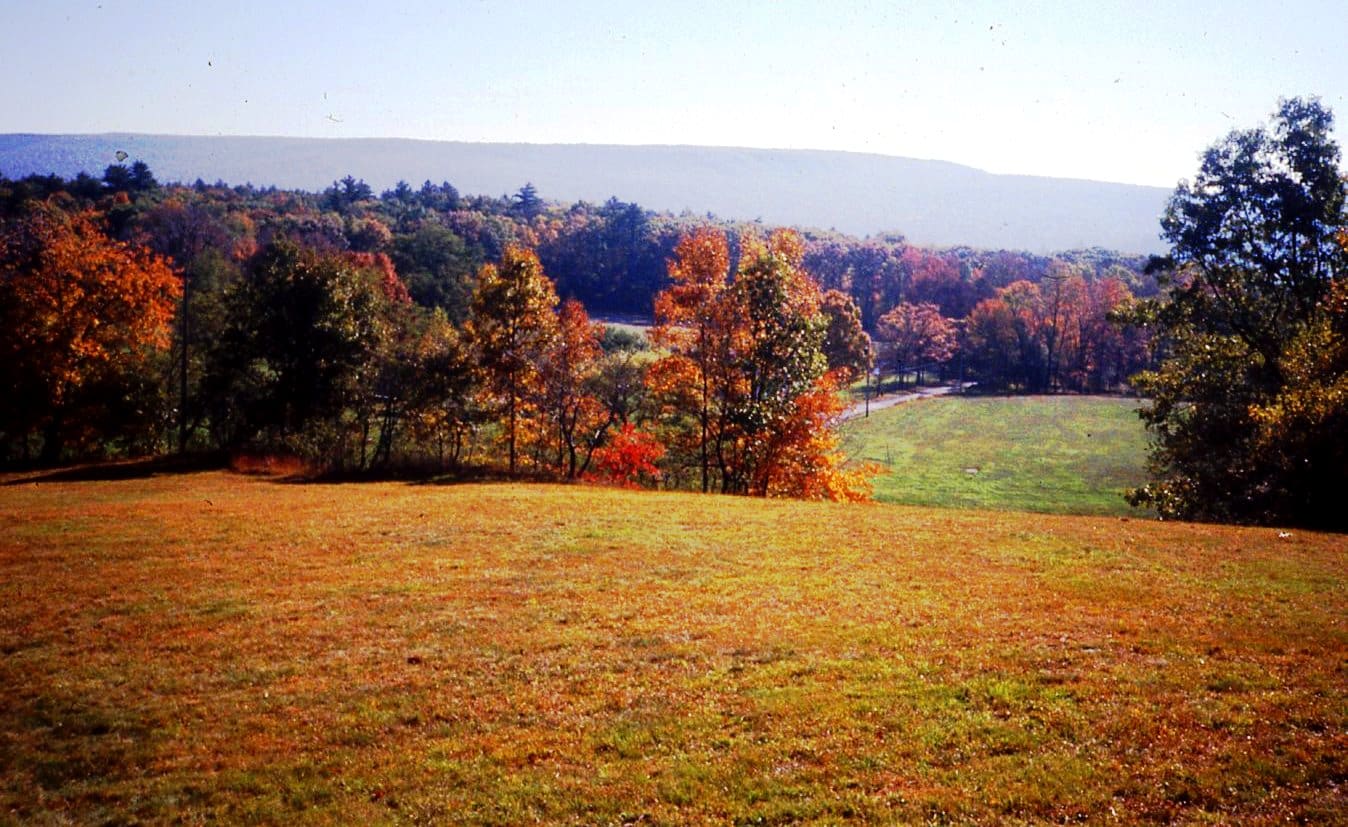
Camp Deerpark is nestled in the Shawangunk Mountains on the land that was once the home of the Lenape (len-AH-pay) or Lenni-Lenape Native American peoples. The Munsee, a subtribe of the Lenape, lived along the upper portion of the Delaware River. Shawangunk is a Dutch translation of the indigenous Munsee name “schawank,” meaning “that which is smoky air.” The Shawangunk area can be noted for the heavy humidity and atmosphere caused by the mountain ridge running southwest to northeast partially blocking the prevailing west to east wind. Camp Deerpark staff and guests have long appreciated the breathtaking view when driving into the Shawangunk valley on Route 17.
The land of the Lenape included what we know as eastern Pennsylvania; southeastern New York state, including New York City; New Jersey; northern Delaware and a small area of southeastern Connecticut. This land was called the Lenapehoking (meaning “Land of the Lenape”) and the land was split between three clans or geographical divisions of the Delaware region: Turtle, Wolf and Turkey. The Wolf clan was known as the Munsee or Minisink, which means “at a place where stones are gathered together.”
The Lenape believed that the land was sacred and belonged to everyone. They usually lived in small groups of 25 to 50 people. They built wigwam–domed-shaped houses–which were 20 feet across and made from young saplings and bark stripped from large trees. They also lived in longhouses, which were built like wigwams but longer, with room for multiple families. Family ties were important and close relationships existed between parents and children and related clans.
The chiefs—sometimes referred to as sachems—were chosen for their behavior, skill in speaking, honesty, and ability to make wise decisions. The chiefs were also knowledgeable about religion and would lead the people in rituals and ceremonies.
The Lenape men were hunters, but also prepared the land for gardening. Children moved the small rocks away and pulled any weeds. Women planted and harvested the crops and were creative in their methods of planting. To plant corn, beans and squash, their most important crops, the soil was hoed into mounds about three feet in diameter, then planted with five or six corn seeds in a circle at the very top of the mound. About a foot lower on the mound, they planted beans about six inches apart in another circle and finally around the outer edge they planted a circle of squash. This is called the Three Sister’s Garden. The beans climbed the corn and the squash covered the ground holding in moisture. They planted these gardens several weeks apart so they would have fresh vegetables throughout the summer and fall. The women were also responsible to collect sap from maple trees to make maple syrup.
The men would hunt deer and elk in the forest with bows and arrows. They painted themselves with dark paint to blend in with the shadows. When they would bring the animal back to the village, the Lenape would make sure to use all parts of the animal to honor the kill. Other men would fish with nets and hollowed out tree trunks used as canoes in the tributaries of the Delaware and the Neversink rivers. The Lenape enjoyed a wide variety of food, which was distributed and shared so that no one went hungry.
When the Europeans settled here in the late 1600s and early 1700s, they began to call the tribe the “Delaware Indians” as they had trouble pronouncing Lenape. The settlers generally lived in peace alongside the Lenape near the Peenpack Trail. The Europeans had moved from France to get away from the religious persecution that occurred when King Louis XIV revoked the Edict of Nantes, the law which let the Huguenots practice their religion. The Huguenots were Protestants and a branch of Calvinism. They traveled in covered wagons on Old Mine Road, which is now Route 209. They officially owned the land that they settled on in 1697 by getting the Peenpack Patent. This granted them the 1,200 acres from where Route 209 crosses the Neversink River, about three miles south of Camp Deerpark.
In the fall of 2007, soon after Rick Weaver joined the Camp Deerpark staff as the food service director, he spent an afternoon hiking in the woods. He was struck by the rich history represented in the stone walls throughout the camp property. His curiosity led him to carry out extensive internet research. He soon had a new source to draw from. Town of Deerpark, a history book written by Norma Schadt, was published a year later.
In the spring of 2008 Rick prepared a Saturday evening dinner that reflected his research. The menu read: 300 years ago . . . on this site, we might have eaten: Pumpkin Soup, Skillet Cornbread with Maple Butter, Shawangunk Salad (wild greens, watercress, dill weed, corn, tomato, radish, red beans, sunflower seeds, with a honey vinaigrette dressing), Hog Wild BBQ Loin, Sour Cream & Horseradish Mashers, Msikwatash of the Three Sisters(corn, beans, squash), Munsee Cherry Pudding Cake.
The Lenape and the Europeans learned a lot from each other. For example, the Lenape began to use European metal field tools to help plant crops. The later generations of the European settlers even learned how to communicate using the Lenape language and they adopted some of the ways of Lenape dress, like using leather for their shoes and clothes.
The European settlers included families named Cuddeback and West-brook. Mr. Westbrook ran a general store near his house. Four miles south of the Westbrook Store, Mr. Cuddeback built a gristmill near his house where he would grind the grain for the neighbors. Today Camp Deerpark is located halfway between Westbrookville and Cuddebackville.
During the French and Indian and Revolutionary wars, the Lenape often fought beside their European allies and against each other. Eventually, the Lenape were driven from their land and moved out west, including to Oklahoma, and north into Canada, where the majority of the Lenape live today.
Even so, the Lenape legacy in this region lives on for those who remember, in part through language. Many place names come from the Lenape, such as Hackensack, Manasquan and Manhattan.
—Written by Dillon Hershey, Ken Bontrager, and Donna Stoltzfus
Related Entries
Share:

Come and Pray Lunch & Retreat
Come and PrayPrayer Day with Lunch March 14, 9am-3pm~$30~ Overnight Prayer RetreatMarch 13-14includes March 14 Lunch~$120~ Come seek the Lord’s face with your faith family from all over the Tristate region for a relaxing time of prayer and discussion. We know God is doing amazing things — and he will continue to do more as…
Time to Pray
As followers of Jesus, he is our example in everything. When Camp says in our mission statement that we are “a community of Christ” – this is what we’re saying: we’re a group of people dedicated to the purpose of following and being like Jesus. So the question is, how do we follow Jesus as…
A Place of Prayer
Prayer — especially “vertical prayer” for specific God-revealed mission set apart from the concerns of our life and ministry — is a major theme for Camp in 2026. Maybe you read about this in the Winter Newsletter article “Time to Pray“? We want to extend the invitation to the entire Camp community and beyond —…

Living Abundantly Retreat
Jesus promised his followers an abundant life. Is that just an abstract idea to distract us from earthly misery, or is there real power in Christ to live a full and rich life in the here and now? Young adults are navigating a challenging landscape as they start “adulting” and building a life, so we’ll…
Forgiving Debts: 2025 Woodcutting Season
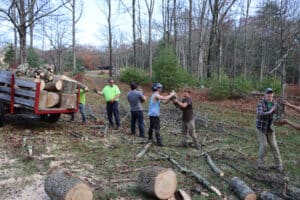
When Jesus taught his disciples to pray (Mt 6:9-15), he described two big realities where “thy Kingdom Come, thy will be done on Earth as it is in Heaven” are realized in the human world: First, he said “give us this day our daily bread”, acknowledging that God’s provision for human need is a central…
“How Do I Donate?”
Recently, a thirteen-year-old guest at Camp asked Operations Director Kevin Smith, “how do I donate?” Kevin was honestly a little surprised, but was happy to see this young member – who was on retreat with one of our owning churches — taking some initiative. Kevin directed him to the website Donate page, and the young…
The Discipleship Down-Low
Defining Discipleship 18 And Jesus came and said to them, “All authority in heaven and on earth has been given to me. 19 Go therefore and make disciples of all nations, baptizing them in the name of the Father and of the Son and of the Holy Spirit, 20 teaching them to observe all that I have commanded…
The Virtuous Wife
This past weekend, Camp hosted three women’s retreats at Camp. Though the retreat groups were very diverse in background – one was from an urban church plant in Philadelphia, one was from a Garifuna Mennonite church in Brooklyn (an Afro-Caribbean Culture), and one was from a multi-ethnic faith community reaching out in North Jersey. Though…
A Life of Service
I believe the most important thing to God is not our personality, knowledge, or talents, but our availability. How willing and ready are we to respond when He calls, and how ready are we to do what He says? What use to the Lord are people who could do what he wants with excellence and…
Building Belonging
At our February NYC LMC District meeting, we’re discussing the Belonging phase of The Journey Map. In this first phase on the map, individuals and groups on a spiritual journey begin the process of connecting to each other and evaluating the place they may have in each other’s lives. Have you ever been an outsider…