
No Other Foundation

For no one can lay any foundation other than the one already laid, which is Jesus Christ.—I Corinthians 3:11 (NIV)
An audience of hundreds of millions of people watched in awe in the summer of 1969 as American astronauts traveled to make history. On July 20, with fuel running low and computer alarms adding to the drama, the Apollo 11 spacecraft landed on the moon. Neil Armstrong, the commander of Apollo 11, made the “giant leap for mankind” when he became the first person to set foot on the moon. The world, 240,000 miles away, would never be the same.
And yet, business went on as usual for most Americans, including a small group of Mennonites who earlier that year had formally started a camp in Cuddebackville (with a mailing address in Westbrookville), about 80 miles north of New York City. Camp Deerpark had been dedicated on May 31 as “a Christian camp” that would be “used to point individuals to Jesus Christ.”
On the night of the moon landing, the camp staff had a rare moment to actually sit down and watch TV. They had just completed an intense opening session, with the first children’s camps, for 8–10-year-olds and then11–12-year-olds, during the two weeks right after Independence Day.
As soon as the older children left, members of Glad Tidings Mennonite Church arrived for the first congregational retreat at Camp Deerpark. Over that July 18–19 weekend they took meals and slept in the main building, Spruce Lodge; they went swimming in the banked pool that was barely warmer than the mountain stream that fed it, sucking the breath away from those who dared to dive in.
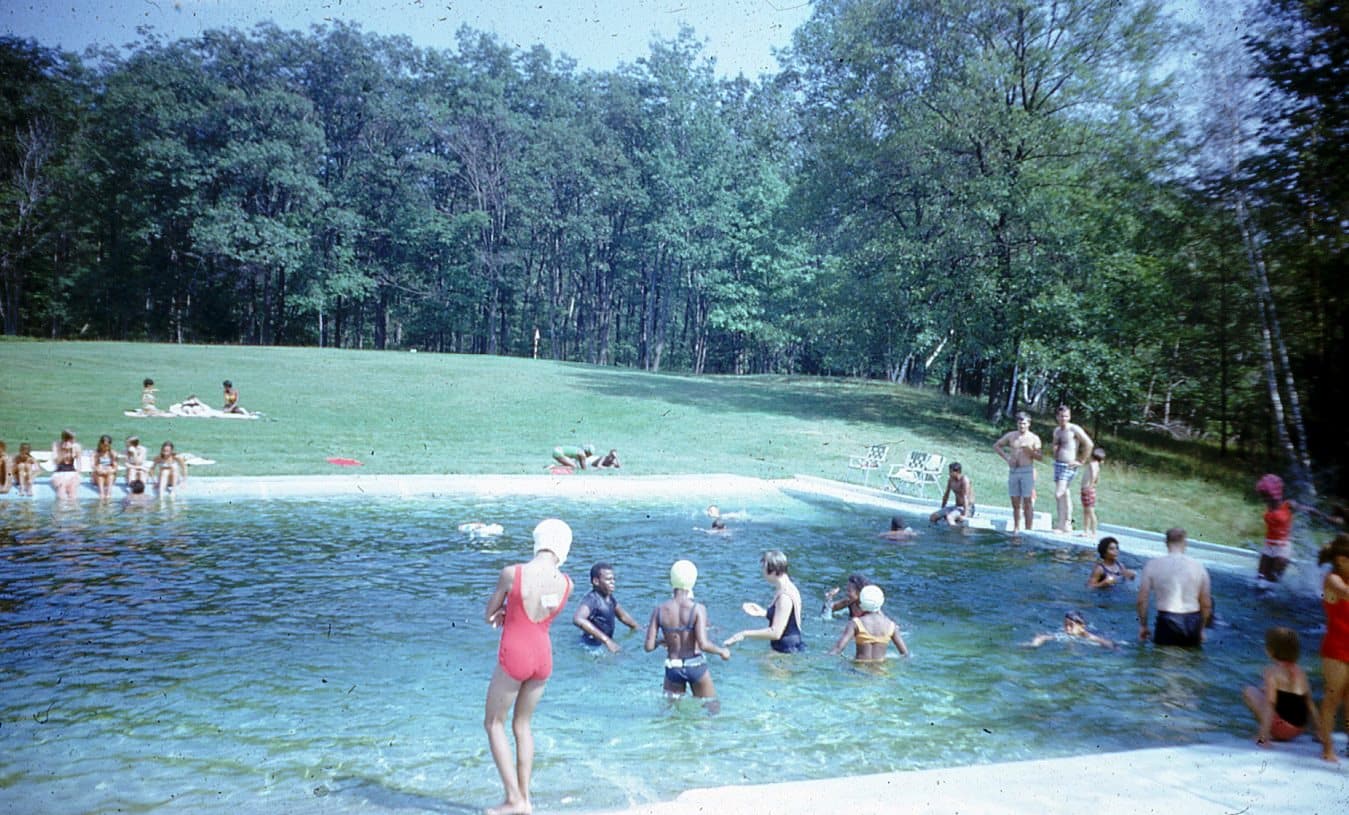
When the church retreat ended and the buildings and grounds were cleaned, some staff members headed home to New York City that Sunday evening, just in time to watch the moon landing the next day. Any staff who stayed would have forfeited the chance to watch the historic event—there was no television on the camp grounds (and the radio reception there in the woods was not much to speak of—one young listener who carried a radio around the property searching for the best signal can confirm that in every Yankees game the static always won out).
Having a camp of their own had been a longtime dream of the Mennonites in New York City. From the beginning, many of the churches had focused on children’s and youth programs. Establishing a camp was a natural extension of that ministry.
In the early 1960s, groups of three or four Mennonites from the city traveled north to explore camps that might be used by families and children. They visited camps in Bloomingburg, Chester, Cuddebackville, Middletown, Nyack, and Valley Brook.
The most promising arrangement was with Camp Brookhaven, owned by the Brethren in Christ. The Mennonites leased a cabin at Brookhaven in1963, their first venture in camping. John Kraybill joined the Camp Brookhaven board as the Mennonite representative, and, when he left New York City, Dale Stoltzfus took his seat on the board. Mennonites from the city participated in retreats there and their children attended summer camps.
In Pennsylvania and elsewhere, church camps for mission outreach and community renewal took root in the 1950s. Tel-Hai Camp opened in 1950,the first to host Mennonite children from New York City. Options increased with the addition of two other Pennsylvania camps, Black Rock in 1954 and Camp Hebron in 1957.
On September 2, 1968, Mennonites learned that the Brethren in Christ decided that their own churches needed greater use of Camp Brookhaven, which would limit opportunities available to the Mennonites. That same fall, a group known as the Camp Committee began looking for alternatives to Brookhaven.
John Smucker, Dale Stoltzfus and Glenn Zeager visited several proper-ties. By mid October, they had found nothing promising.
On November 5, they spent a long day with Patrick McDerrmitt, areal estate agent, visiting six properties. The Mennonites were not happy with any of them. Patrick said, “There’s one more place, but it’s much more expensive—it’s more than what you want to pay.”
The Mennonites had determined that their limit was $50,000. The asking price for the more expensive property Patrick mentioned was more than double that amount, $125,000. Even so, they decided to have a look.
That same day Patrick drove them to the property, a former country club, in Westbrookville. When they rounded a curve in Brandt Road and saw the property for the first time, Dale remembers thinking, “What a beautiful place.” And then: “This is the answer to our vision for expanding ministries.”
On that first visit, they saw two deer standing on the hill where the pool is now. The former country club included a main lodge, a residential annex, a casino, motel units, a garage, a pool and other amenities.
In reporting to the administrative councils of Mennonite and Brethren-in-Christ churches in New York, Dale described the layout and said “very little work would have to be done” to open a camp there.
The minutes of that November 9 meeting convey a sense of promise: “After some discussion, the question was asked, ‘What should the commit-tee do when they meet with the real estate broker?’ Gene Shelly made the following motion, which the council passed: ‘The camp committee should move ahead in trying to purchase the property through entering into a con-tract with the widest period of time for the closing of the contract.’”
The churches decided to offer $85,000 in cash. More than once, church members drew courage from the Gospel account of feeding the 5,000 with a few loaves and fishes.
The New York City Mennonites also invited four church members from Lancaster County, all businessmen, to look over the property: Dan Glick, Don Gunden, Henry Martin Jr. and Paul Smucker. They were from Atlantic Coast Conference congregations. Before traveling to camp, the four visited New York City. The timing was unfortunate, as a garbage strike had left the city in a foul state. The camp property probably never looked or smelled so good. The four endorsed the purchase. Two of them, Dan Glick and Don Gunden, remain active supporters.
The Mennonite churches in New York City had work to do in securing financing. Patrick called ahead to the Goshen Savings Bank in Goshen, New York, where they hoped to secure a mortgage. At that first meeting Dale and Glenn explained that they were representatives of the Mennonite churches in New York City, which wanted to buy the property for a Christian camp.
By this time it was clear that the $85,000 offer had been accepted by the owners—but with conditions. The loan officer said that he had to meet with a committee to discuss the loan. He asked Dale and Glenn to check back in with him in a couple of weeks. They went back at the appointed time.
Since he had last met with them, the loan officer said, he had had an interesting discussion at a banking conference in the Midwest. He said he had met someone from Hesston, Kansas, and they got to talking.
The loan officer from Goshen said, “I asked him, ‘Have you ever heard of the Mennonites? I had some in my office and they are asking for a loan. I’ve never heard of them.’ ”
“Oh, I deal with Mennonites all the time,” the banker from Hesston said. “I would encourage you to give them the loan. Mennonites are as good as their word.”
So with that timely endorsement, Goshen Savings Bank decided to give the Mennonites from New York City a loan, for $49,600.
They had also applied for a loan from Eastern Mennonite Missions. Ata Lancaster Conference meeting, Ira Buckwalter, treasurer, informed them that they, too, would issue a loan, of $12,000.
The churches in New York City already had $5,000. That put them at nearly $67,000, still more than $18,000 short, at the beginning of April.
The balance had to be raised by the closing date in early May. That’s when Dale decided to quit his job as a case worker with the New York City Department of Social Services to concentrate on raising the remaining funds over the next month. He did so with a supportive New York City team of Mennonite pastors and leaders.
By the first week in May, the churches pulled within $5,000. The final gap was closed with a check from the Brethren in Christ. The Mennonite churches had made a $5,000 investment in Camp Brookhaven and now withdrew that amount on deadline for a camp of their own.
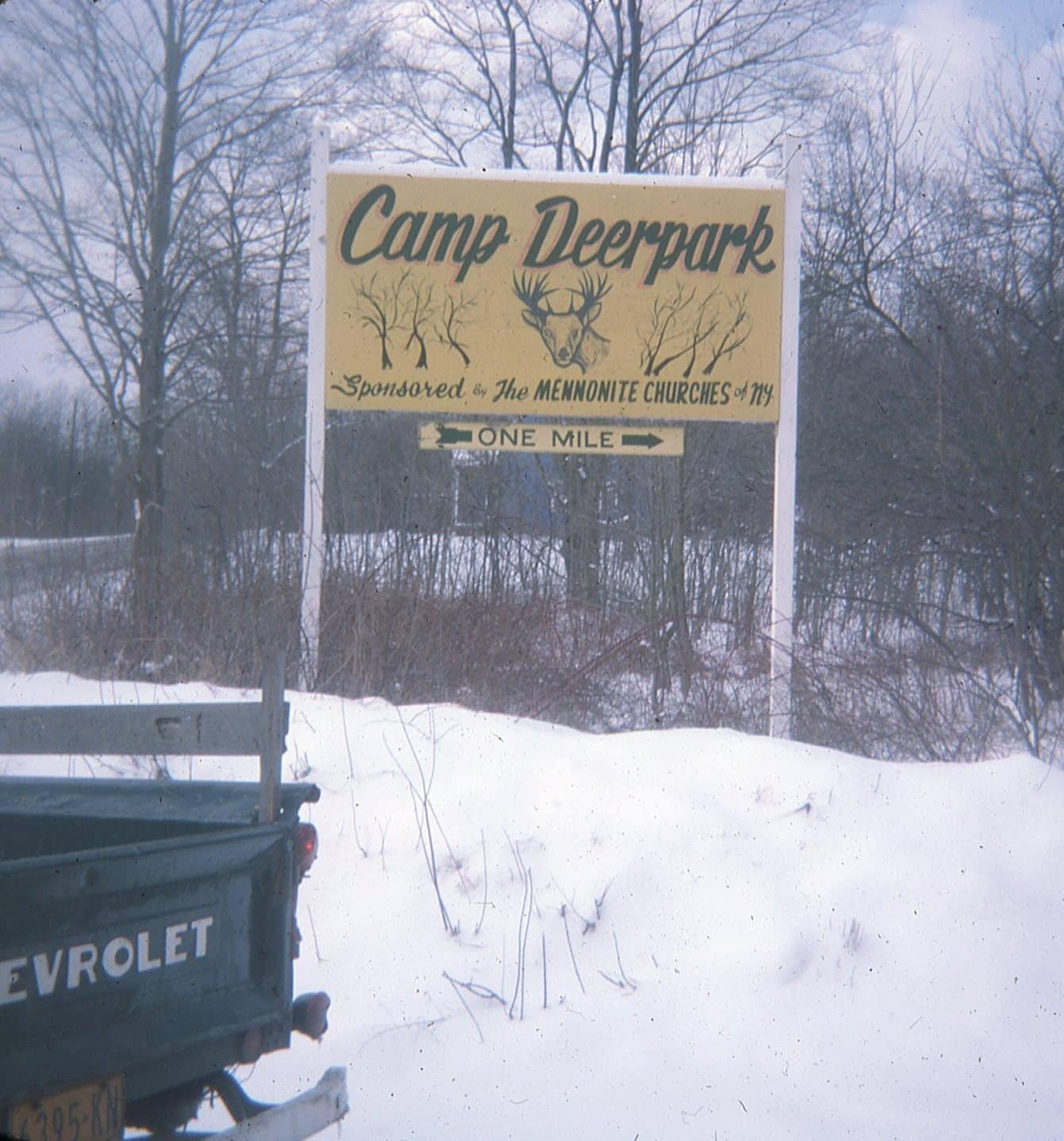
included in the camp purchase.
On May 5, Dale drove to Lancaster County to pick up the check, and returned to New York City the same day. He drove the next morning ,along with the New York City team, to Middletown, New York. They arrived in time for the closing at 11 a.m.
Under the name Mennonite Action Pro-gram, the Mennonite churches from New York City closed on the property on May 6, 1969.
The ministry also had a name: Camp Deerpark. The 277 acres on which the camp would be developed was flush with deer and other wildlife such as raccoons, rabbits, squirrels and at times even bear and wild turkey. The camp name was also inspired by its home in the Town of Deerpark, a municipality made up of seven hamlets, including Westbrookville and Cuddebackville.
The camp property was settled in the early 1800s as a farm. During the Depression, in the mid 1930s, the owners welcomed guests from New York City who wanted to experience country life. The buggy shed, the chicken barn and other buildings were converted into the emerging farm resort, and a golf course claimed 10 acres as the farm resort became a modest country club.

In selling the property to Mennonites who would create Camp Deer-park, the owners left behind traces of that country club life, including well-used golf clubs and a stately white front porch that looked out on a row of locust trees and a great lawn that encompassed several acres, surrounded by woods on all sides. In the transition from country club to church camp, the building known as the casino became the chapel.
Early visitors to the camp testify to the powerful first impression of the property. After winding along Route 209, a traveler turned onto Brandt Road and climbed about a mile through the woods, suddenly emerging in a clearing, with the pool off to the right and spacious lawns on either side of the road, leading up to the main lodge.
The touches of rustic elegance included a carved-out log just outside the lodge dining room through which a stream ran and then tumbled several feet in a waterfall. For many children at summer camp that log served up their first drink straight from a mountain stream.
The property was soon put to full service for the Mennonite churches and children from New York City. By the second summer, a complete slate of children’s camps were offered, extending the ages served from 8 to 15 and then older teens.
Fund-raising would follow, reliant especially on banquets and auctions. The first “Pennsylvania banquet” was held at the Willow Valley Restaurant in Lancaster in 1970, bringing in $2,333. The following year, the first “New York City banquet” was held at the Neptune Inn in New Jersey, raising$1,725. The camp auction was introduced in 1970 in Harleysville, Pennsylvania, which was coordinated by auctioneer, Alvin Horning.
Construction at camp would begin almost immediately and never really stop. In the fall of 1972, the one-story wooden chapel was lifted off the ground, courtesy of jacks, and a basement installed (a $12,000 undertaking). Three years later, work began on a hillside pool to replace the flow-through pool at the lower end of the great lawn.
Half a century later, some of the original facilities, like Spruce Lodge and the chapel, remain in place, humble but comfortable and welcoming. In recent years, the construction of cabins for children and staff, in a tucked-away section known as Promise Woods, transformed both the appearance and services of Camp Deerpark.
As it was in 1969, Camp Deerpark is owned by and dedicated to serving inner-city Mennonites. Presently, 17 churches are joined as owners. The mission remains to extend the ministry of Jesus Christ. The camp continues to offer people of all ages, races and backgrounds an opportunity to enjoy Christian camping at a reasonable price.
In a 2017 issue of the camp newsletter, the longtime current director, Ken Bontrager, reflected in his column, “From the Director’s Heart,” on the many people who provide money and service that allow Camp Deerpark to flourish, half a century after its founding. He noted that some of the donors were former campers; many were second-generation and even third-generation supporters.
Ken wrote: “Parents who model service and include their children in work experiences are showing vision for their own children and for the entire Camp Deerpark community. If we can get children and youth excited about service, the Camp Deerpark family will be strong for generations to come.”
The many contributors to this commemorative history reflect that shared and abiding commitment to the ministry of the church and to a camp that stands as a light on a hill, from the ringing of the breakfast bell in the morn-ing till singing around the campfire at night.
Written by Duane C. Stoltzfus, former camper and staff.
Related Entries
Share:

Releasing and Loving “The Other Side”
This is Session 1 of the Prince of Peace: Jesus and Peacebuilding from the Election to the Holidays webinar series. (Click here to sign up for session invites.) This session is about what we do with those in our lives who see things differently — even very differently. We do this using a paradigm from…

Story of A Tree
A fresh tree stump is like a magnet to me. I have to look at the rings to read the tree’s story. It’s at once humbling to look inside a living thing that is much longer-lived than yourself, but also encouraging to see how it weathered the ups and downs of life, the good times…
Camp’s Political Endorsement
I’ve been eligible to vote for 30 years, but – like many in my generation – I’ve never felt like a politician or party truly represented me. They may win me at one point, but they’ll loose me in the next. When I have voted, it always seemed I was going to the polls holding…

Prince of Peace
Camp’s mission statement says we offer people the opportunity to fellowship in “serenity”. Serenity literally means “clear skies” — a state of refuge from the storms of the World. Right now, our World does feel pretty stormy with a divided country going into an election and numerous disasters and conflicts abroad and at home. Because…
Mapping Spiritual Journey with NYC Leaders
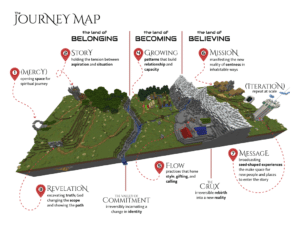
In order to know where you’re going, it’s a good idea to know where you are. One of the best ways to know where you are is a good map. The NYC LMC District is seeing growth in many of our churches right now, and opportunities for re-inventing and re-launching in others. But these are…
How Do You Define Mission?
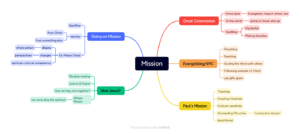
When somebody says “I’m on a mission”, what do you think of? If the word is said in church, what is the first thing that comes to mind? You may think of someone clutching a Bible in a jeep jostling down jungle roads. Or you cold be thinking of a caring staff at an remote…
A Special Request for Baby Vivian
Serving God, while the greatest of blessings, is no guarantee that everything will go well in life. Tragedy, difficulty, and suffering can find any of us at any moment, and when it does, the people of God are essential in helping us navigate the valleys of shadow with Jesus by our side. Ben Gosnell came…
You Can Always Come Home
In the pursuit of mission, I’ve moved around a lot as an adult. To be perfectly honest, I haven’t found a place since Mom and Dad’s house that I felt was mine — a place I could call home. If you find yourself longing for home, you’re in some pretty good company. It says in…
Map Makers Project
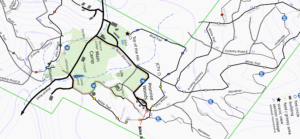
Camp is a big place and we have some big plans. But this raises a big question: Just where is everything? In the past, we asked around and maybe somebody would know. Now, we’d like to get all that information down on a map. We’ll use it to maintain the grounds, plan maintenance projects, and…
Welcoming Wisdom: Cabin 2 Opens in Promise Woods
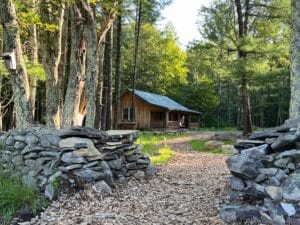
We’re very pleased to announce that Cabin 2 “Wisdom” is now open in Promise Woods for retreat groups and other guests. Wisdom is our 5th (of 6) bunk cabin to be completed and it sleeps 10 in the spacious bunk room and two more in the cozy bedroom. Like all of our camper-style cabins, it…
- « Previous
- 1
- 2
- 3
- 4
- Next »