

This is Session 3 of the Prince of Peace: Jesus and Peacebuilding from the Election to the Holidays webinar series. (Click here to sign up for session invites.)
Sometimes people seem so different from us, we automatically assume we can’t connect. Or, we tried to connect on some level, but it quickly became way too complicated. We’ll talk with Kevin King of Mennonite Disaster Service about the connections people are forming every day when they connect to basic needs in the worst situations. His work proves the old maxim remains true: people will care how much you know when they know how much you care.
In this session: The surprising secret of the most successful evangelist I ever knew. How I learned the art of chill with young people with whom I had almost nothing in common. The secret to rapidly creating deep and lasting belonging with people. How Jesus encounter with the woman at the well is a map for connecting with others. How Jesus surprising “de-preparation” method in Luke 9 lead to successful connections. Plus ideas for making peace connections on these levels in your sphere.

Session Notes
Here’s some of the things mentioned in this session that you can explore on your own. Please remember that Camp offers these links and resources as explanatory documents as part of a conversation that includes some hard questions worth asking and sharing them here does not imply an endorsement or official position of Camp, it’s board, staff, or constituents. We are a diverse community whose position is peace and work is love!
The Greatest Evangelist I Ever Knew
When I was in college, I interned at a big and growing church in Tennessee. Always, I would meet new people there who would say, “I wouldn’t know Jesus if it weren’t for Keith.” Keith was the preacher at the church, and he had this incredible way of connection people to Jesus. I really wanted to know what it was he was doing. Was it some kind of Gospel presentation or clever argument that drew these people in? One day he took me to lunch and I had a chance to find out.
The waitress came over to take our order. Keith looked at her and in his slow Alabama drawl said, “Diena, that’s a lovely name! How do you like working here?” He had obviously picked up on something. As soon as he said it, her forced smile faded. Being here was not her favorite thing. In fact, it was painful. I don’t remember what she said in response, but I remember him saying, “Well, thank you for serving us anyway.” Afterward, when he gave her his card and invited her to call, she said “Thank you” and held that card as if it was a lifeline.
Keith was so successful because he was willing to see people and connect to them on a human level. This opens a door into people’s heart that Jesus, the most righteously human human, can walk right into (Matthew 10:40; John 13:20).
The Art of Chilling with Young People
I’ll confess: I wasn’t ever a “real” teenager. Sure, I went through the teen years — with the angst and self discovery, etc. — like everyone else, but I never really identified with the typical teen experience centered around “trying to be cool”. For a long time this was a real barrier to relating to young people. I didn’t care about cool. I didn’t try being cool. So I couldn’t really relate.
Then I discovered something: there’s a whole different way to relate. Of course, people want to connect to people like them: people who like the same things and think the same things are cool. But actually, what they want more is to connect to people who see them — even if those people are totally different. I started to build my skills to see people in their story. Story is a natural tension between aspiration — what we want — and situation — the reality we find ourselves in. When we listen to people in a way that shows we know their aspiration and their situation, they feel belonging despite how we may be different — even very different.
Since I’ve learned this, I’ve never had a problem creating deep and meaningful friendship with young people or anyone for that matter, no matter what little we might have in common.
Creating Belonging
I found that story plays an essential role in belonging as well. When people connect to each other’s aspiration and situation, they feel like “this is my person, these are my people.” I’ve used this to create deep community in a matter of months with different type of groups from mountain-biking crews to spiritually curious homeschooling moms.
But the essential thing in generating this belonging is that the people in the group share both aspiration and situation. This is often real work. If someone comes into a group wanting to relate on what they want and project themselves as successful, they might feel a temporary connection based on status, but eventually they will not feel known or connected and they will flake. On the other hand, if some one comes into a group just based on their situation and the need them have, they will feel like a client but not a member, and once their need is met they will move on (or if their need is not met quickly, look elsewhere).
Belonging requires a balancing. If we initially connect to someone based on situation, we must seek out and show we care about their aspiration. We must believe in who they want to be beyond their need. Conversely, if we initially connect to someone based on aspiration, we must seek out their situation and show we care about and believe in them in the full reality of their situation.
What would you feel if you were known for your success, performance, and utility, but no one cared about your struggle?
What would you feel if people only saw your struggle and problems, but didn’t believe you could really contribute to making the world a better place?
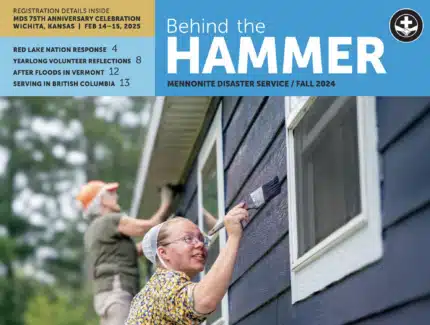
See: “Loss gives way to connection” in the Fall 2024 issue of Behind the Hammer.
The Woman At the Well
There are 4 things going on in this text:
1) Jesus connects on a surprising but human level
4 Now Jesus learned that the Pharisees had heard that he was gaining and baptizing more disciples than John— 2 although in fact it was not Jesus who baptized, but his disciples. 3 So he left Judea and went back once more to Galilee.
4 Now he had to go through Samaria. 5 So he came to a town in Samaria called Sychar, near the plot of ground Jacob had given to his son Joseph. 6 Jacob’s well was there, and Jesus, tired as he was from the journey, sat down by the well. It was about noon.
7 When a Samaritan woman came to draw water, Jesus said to her, “Will you give me a drink?” 8 (His disciples had gone into the town to buy food.)
9 The Samaritan woman said to him, “You are a Jew and I am a Samaritan woman. How can you ask me for a drink?” (For Jews do not associate with Samaritans.[a])
10 Jesus answered her, “If you knew the gift of God and who it is that asks you for a drink, you would have asked him and he would have given you living water.”
11 “Sir,” the woman said, “you have nothing to draw with and the well is deep. Where can you get this living water? 12 Are you greater than our father Jacob, who gave us the well and drank from it himself, as did also his sons and his livestock?”
13 Jesus answered, “Everyone who drinks this water will be thirsty again, 14 but whoever drinks the water I give them will never thirst. Indeed, the water I give them will become in them a spring of water welling up to eternal life.”
15 The woman said to him, “Sir, give me this water so that I won’t get thirsty and have to keep coming here to draw water.”
2) Jesus sees her situation
16 He told her, “Go, call your husband and come back.”
17 “I have no husband,” she replied.
Jesus said to her, “You are right when you say you have no husband. 18 The fact is, you have had five husbands, and the man you now have is not your husband. What you have just said is quite true.”
3) Jesus reveals her aspiration
19 “Sir,” the woman said, “I can see that you are a prophet. 20 Our ancestors worshiped on this mountain, but you Jews claim that the place where we must worship is in Jerusalem.”
21 “Woman,” Jesus replied, “believe me, a time is coming when you will worship the Father neither on this mountain nor in Jerusalem. 22 You Samaritans worship what you do not know; we worship what we do know, for salvation is from the Jews. 23 Yet a time is coming and has now come when the true worshipers will worship the Father in the Spirit and in truth, for they are the kind of worshipers the Father seeks. 24 God is spirit, and his worshipers must worship in the Spirit and in truth.”
4) This creates belonging and belief
25 The woman said, “I know that Messiah” (called Christ) “is coming. When he comes, he will explain everything to us.”
26 Then Jesus declared, “I, the one speaking to you—I am he.”
27 Just then his disciples returned and were surprised to find him talking with a woman. But no one asked, “What do you want?” or “Why are you talking with her?”
28 Then, leaving her water jar, the woman went back to the town and said to the people, 29 “Come, see a man who told me everything I ever did. Could this be the Messiah?” 30 They came out of the town and made their way toward him.
31 Meanwhile his disciples urged him, “Rabbi, eat something.”
32 But he said to them, “I have food to eat that you know nothing about.”
33 Then his disciples said to each other, “Could someone have brought him food?”
34 “My food,” said Jesus, “is to do the will of him who sent me and to finish his work. 35 Don’t you have a saying, ‘It’s still four months until harvest’? I tell you, open your eyes and look at the fields! They are ripe for harvest. 36 Even now the one who reaps draws a wage and harvests a crop for eternal life, so that the sower and the reaper may be glad together. 37 Thus the saying ‘One sows and another reaps’ is true. 38 I sent you to reap what you have not worked for. Others have done the hard work, and you have reaped the benefits of their labor.”
39 Many of the Samaritans from that town believed in him because of the woman’s testimony, “He told me everything I ever did.” 40 So when the Samaritans came to him, they urged him to stay with them, and he stayed two days. 41 And because of his words many more became believers.
42 They said to the woman, “We no longer believe just because of what you said; now we have heard for ourselves, and we know that this man really is the Savior of the world.”
While Jesus way of being here is transformative, I want to point your attention to what Jesus says he’s getting out of this encounter — doing the Father’s work and participating in the harvest of souls into real humanity and real community feeds his Spirit and soul. Many people these days report a deep spiritual hunger that is not satisfied even after many church Sundays and streaming worship songs. While these things are great, true food for the soul are connections that link real humanity to eternal purposes.
De-preparing
Surprisingly, (or maybe unsurprisingly) you don’t always have to be on the giving end in order to connect with people on a human level. In Luke 9:2-4, Jesus gives these instructions to his disciples:
2 He sent them out to preach God’s Kingdom and to heal the sick. 3 He said to them, “Take nothing for your journey—no staffs, nor wallet, nor bread, nor money. Don’t have two coats each. 4 Into whatever house you enter, stay there, and depart from there.
Why would Jesus de-prepare his people in this way?
Once, a friend talked me into going with him on a two-week mission trip to Japan. He was a man of radical faith. We had almost no money (about $35 between the two of us, most of it in my pocket). We didn’t even have tickets to Japan. I flew to LA to meet him on a free ticket a friend got from her mom who worked with the airline.
Somehow we got to Japan. And actually, what I thought was likely to be a huge disaster was the most amazing mission trip. Because we had to rely on people, they opened their lives to us in profound ways. Even in a culture usually closed to outsiders, we were drawn in on a very human level making our work shockingly effective.
We tend to think to serve people or connect to them on a Kingdom level, we have to be the ones offering something — the ones to show we have it together and have all the answers. When it comes to the Kingdom of the Incarnated Son of God — the divine in the flesh — the opposite is true. When we connect to people on a human level — even if they level is our own need and vulnerability — it opens up opportunities for Kingdom connection.
Resources
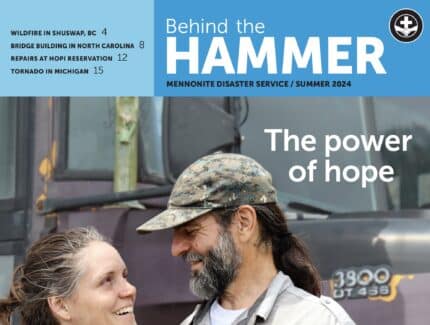
Behind the Hammer is the quarterly story-telling publication of MDS. Within it pages you’ll read many inspiring stories of people impacted on a fundamentally human level and the relationships that created. I especially recommend reading “Loss gives way to connection” in the Fall 2024 issue — which inspired much of this conversation.
MDS offers opportunities to go out and live stories as well: Ways to Volunteer
Share:
Prayer Tuesdays
Our theme for this year at Camp is “A Place of Prayer“. We’re especially focused on aligning or intercessory prayer — where we seek to hear from the Lord and align to his will. Our model for this is Jesus when he sought out a desolate place outside of ministry in Mark 1. Jackie Morrell…

Come and Pray Lunch & Retreat
Come and PrayPrayer Day with Lunch March 14, 9am-3pm~$30~ Overnight Prayer RetreatMarch 13-14includes March 14 Lunch~$120~ Come seek the Lord’s face with your faith family from all over the Tristate region for a relaxing time of prayer and discussion. We know God is doing amazing things — and he will continue to do more as…
Time to Pray
As followers of Jesus, he is our example in everything. When Camp says in our mission statement that we are “a community of Christ” – this is what we’re saying: we’re a group of people dedicated to the purpose of following and being like Jesus. So the question is, how do we follow Jesus as…
A Place of Prayer
Prayer — especially “vertical prayer” for specific God-revealed mission set apart from the concerns of our life and ministry — is a major theme for Camp in 2026. Maybe you read about this in the Winter Newsletter article “Time to Pray“? We want to extend the invitation to the entire Camp community and beyond —…

Living Abundantly Retreat
Jesus promised his followers an abundant life. Is that just an abstract idea to distract us from earthly misery, or is there real power in Christ to live a full and rich life in the here and now? Young adults are navigating a challenging landscape as they start “adulting” and building a life, so we’ll…
Forgiving Debts: 2025 Woodcutting Season
When Jesus taught his disciples to pray (Mt 6:9-15), he described two big realities where “thy Kingdom Come, thy will be done on Earth as it is in Heaven” are realized in the human world: First, he said “give us this day our daily bread”, acknowledging that God’s provision for human need is a central…
“How Do I Donate?”
Recently, a thirteen-year-old guest at Camp asked Operations Director Kevin Smith, “how do I donate?” Kevin was honestly a little surprised, but was happy to see this young member – who was on retreat with one of our owning churches — taking some initiative. Kevin directed him to the website Donate page, and the young…
The Discipleship Down-Low
Defining Discipleship 18 And Jesus came and said to them, “All authority in heaven and on earth has been given to me. 19 Go therefore and make disciples of all nations, baptizing them in the name of the Father and of the Son and of the Holy Spirit, 20 teaching them to observe all that I have commanded…
The Virtuous Wife
This past weekend, Camp hosted three women’s retreats at Camp. Though the retreat groups were very diverse in background – one was from an urban church plant in Philadelphia, one was from a Garifuna Mennonite church in Brooklyn (an Afro-Caribbean Culture), and one was from a multi-ethnic faith community reaching out in North Jersey. Though…
A Life of Service
I believe the most important thing to God is not our personality, knowledge, or talents, but our availability. How willing and ready are we to respond when He calls, and how ready are we to do what He says? What use to the Lord are people who could do what he wants with excellence and…